As renewable energy capacity continues to expand, utilities and industrial facilities are paying closer attention to frequency regulation in power systems. Grid frequency changes when power generation and electricity demand are not balanced. To manage these fluctuations, operators often rely on battery energy storage systems connected to an energy management controller. This controller monitors grid conditions in real time and adjusts charging or discharging behavior within seconds. In many modern projects, frequency regulation depends on coordinated communication between storage equipment, inverters, and dispatch platforms.
The Roles of EMS and PMS in Grid Stabilization
While a standard controller balances daily energy dispatch, frequency regulation demands a high-speed, dedicated architecture. The PMS operates at the local millisecond level, handling rapid data acquisition, power conversion management, and automated dispatch commands to the inverters when voltage or frequency deviations occur.
Simultaneously, the site-level EMS coordinates these actions with regional grid dispatch platforms. The EMS evaluates real-time grid conditions, state-of-charge (SoC) parameters, and thermal limitations to ensure the system reacts optimally during sudden load spikes or renewable generation drops without overstressing the battery cells.
Integrated Control Solutions for Complex Grids
Different application environments—such as utility-scale substations, heavy industrial facilities, or remote microgrids—demand distinct control strategies. For instance, an industrial park might prioritize a controller that balances frequency response with peak shaving, while a renewable power plant requires strict output smoothing.
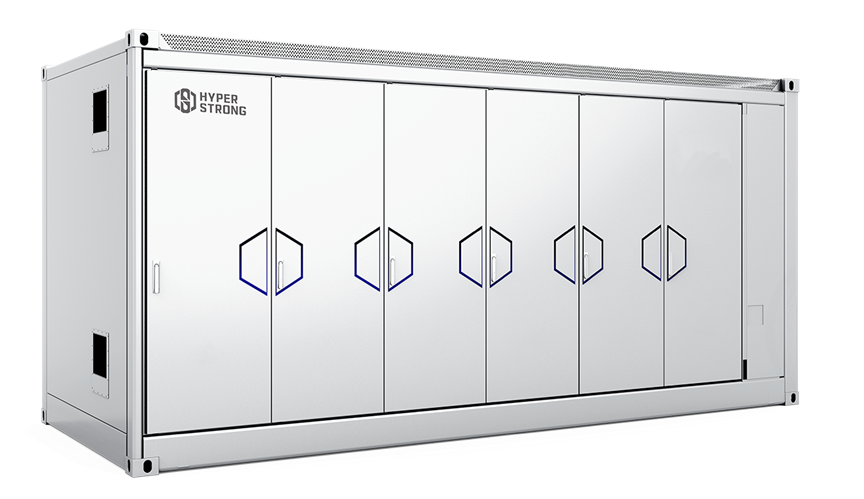
To support these diverse needs, energy storage platforms are designed with fully compatible, adaptive control architectures. The HyperBlock III system integrates high-speed PMS logic capable of executing automated dispatch sequences across large-scale configurations. For projects prioritizing scalability, the modular HyperBlock M architecture allows engineering teams to deploy decentralized control setups that simplify expansion and site maintenance.
Conclusion: Matching Controllers With Grid Demands
Selecting the right controller for frequency regulation in power systems depends on response speed, communication capability, and long-term operational reliability. Modern controllers do more than issue charge and discharge commands; they also support data analysis, equipment coordination, and remote monitoring. As energy storage applications continue to expand across renewable generation and commercial facilities, integrated platforms such as those provided by HyperStrong can help operators manage grid fluctuations more efficiently while supporting stable daily operation.